The 3 Natural Laws Of Rivers

,

·

There are 3 Laws that your rivers MUST follow if they exist on an Earth like planet. You won’t find a river on Earth that breaks any of the following laws follow the below laws and your maps will look realistic. Simples.

1, Just Like Us They Are Born

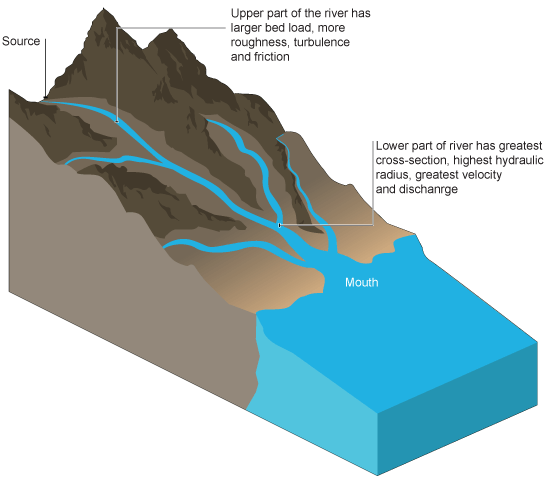
 Every river has a source. They have to come from somewhere and every source usually starts high up in the mountains. Water then moves from a position of high elevation to one of low elevation – or in other words it begins to run down the mountain/hill.

 So when you’re looking for a place to start a river look for the mountains on your map and move towards the sea.
2, Rivers Are Lazy
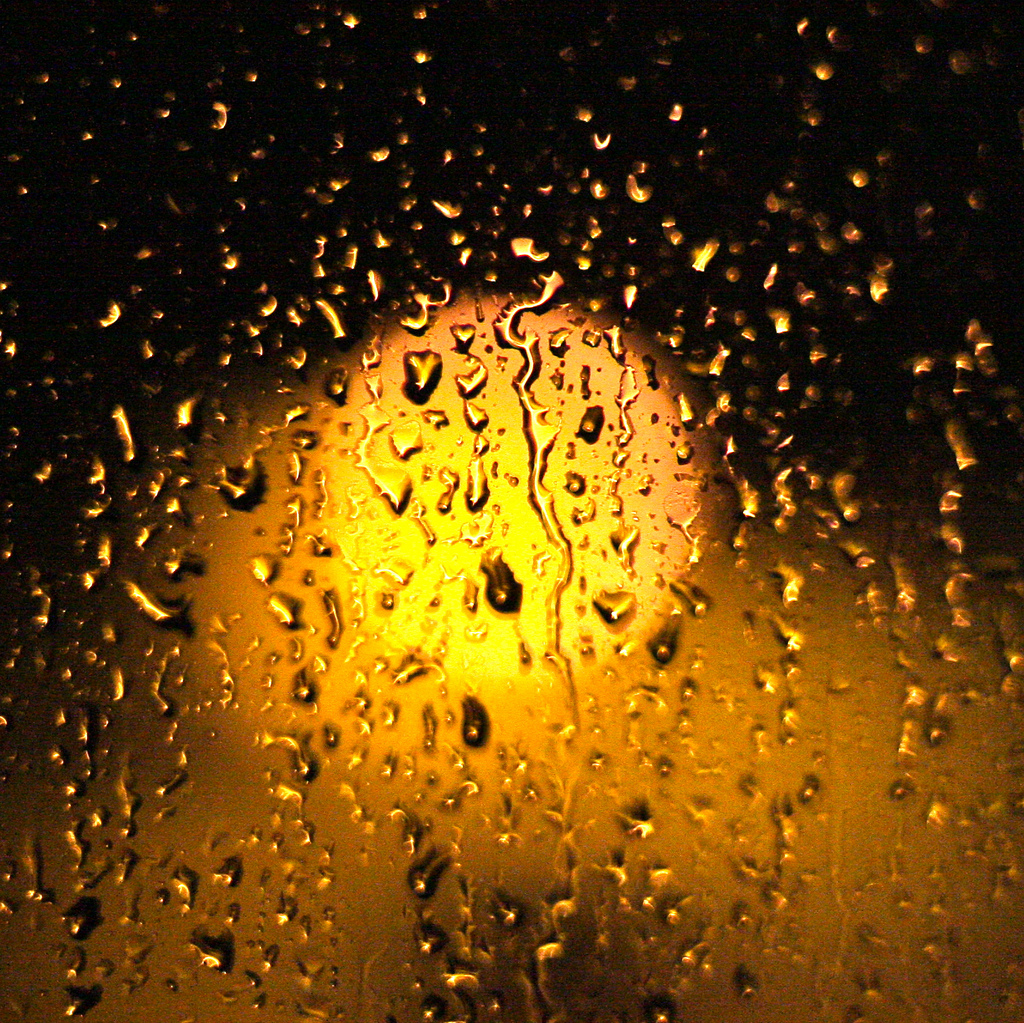

  Water takes the path of least resistance and as rivers are big movements of water they follow the same rule. That means if you place water on a surface it will find the easiest way to get from a high altitude to a lower one.

 You can see this effect if you watch your window when it’s raining outside. Droplets of water will hit your window and slide down, however they never slide in a perfectly straight line. There is always a little wiggle from left to right as the droplet finds the path of least resistance over the surface of the glass.

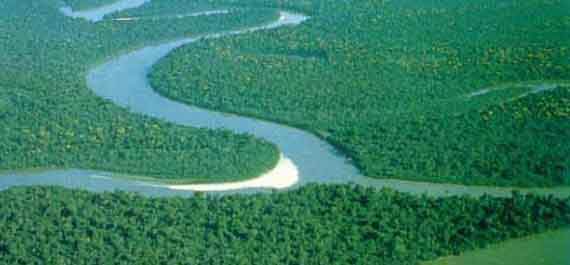
It’s because of this law that you’ll see bendy rivers such as the Amazon. As the water travels over surfaces with different levels of resistance it alters the course of the river.

3, They Want To Be One With The Sea
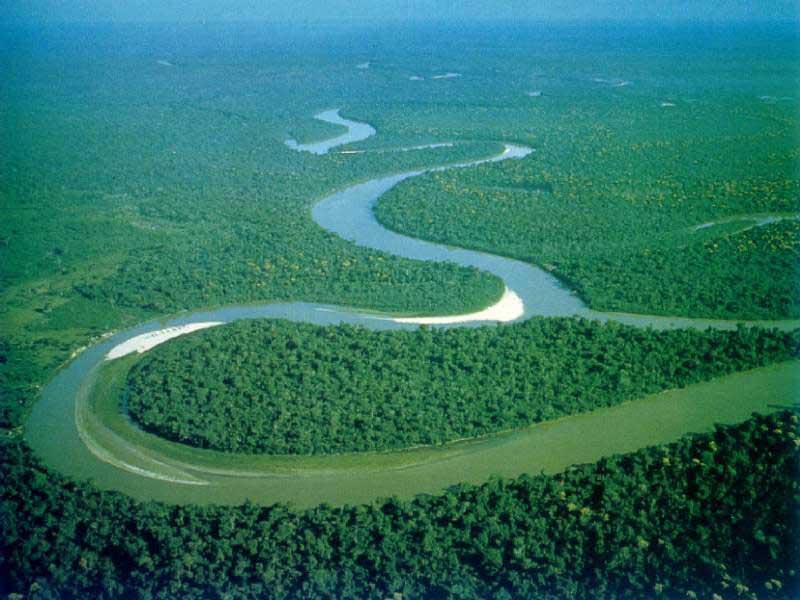
 All rivers have the desire to join the sea. You’ll never see a river just randomly stop in the middle of a body of land. It is possible that it may go underground to reach the sea but these are rare circumstances. Most of the time a rive will move towards the sea or another river and so become bigger and stronger the closer to the sea it gets.

 One thing that some new cartographers do is to end a river halfway in land or they might end it in a lake. This would never happen in real life as even lakes have exit rivers that lead down to the sea. Without the flow of water provided by an entrance and exit river the lake would stagnate and become poisonous to drink from.

 Also it’s worth noting that a lake may have multiple entrance rivers but it will only have one exit river.

The Course Of A River

Here’s a great little diagram that shows the course of a river and the different characteristics at each of the 3 parts of a rivers life.
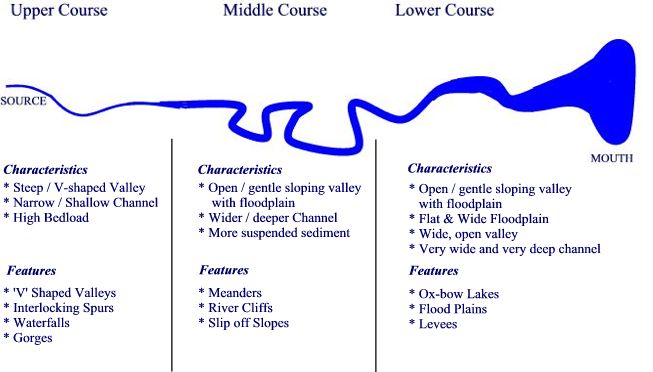
If you follow the general shape and course of the river above in the diagram along with the 3 Natural Laws then your rivers will not only look realistic but they will add extra life to your maps.

How do you name the rivers in your world?

Comments

6 responses

  1. Oh my… Part 3 is full of errors. Never say never when it comes to the strange ways nature is working.
    There are rivers that don’t end in the ocean, the most famous of those is the Okavango Delta in the desert of Botswana.
    And concerning rivers that end in a lake – ever heard about the Europe’s largest stream, the Volga, which ends, like many others, in the Caspian Sea, wich despite its name is a lake. A very large and salty one, but still a lake (who doesn’t really care if it’s poisonous to drink from). Or the rivers Amy Darya and Syr Darya wich would end in the Aral Sea (another lake) if it wasn’t for extensive human use for irrigation purposes.

    1. Hey Jerron,

      I hadn’t seen these exceptions before so good find with them and thank you for sharing. As you say “never say never with nature” as she does love to break her own rules. I’ll go and have a good gander at these different delta’s and lakes, then I’ll update the article to reflect that sometimes rivers do end in lakes. 🙂

      Thank you for sharing and I hope you’re having a good week?

      All the best,
      Nate

      1. And there are even Rivers who don’t flow in just one direction! The Rio Casiquiare in Venezuela ends in both the rivers Rio Negro and Orinoco.

        On my world I even have a huge delta that makes the river Kalenach end in two oceans!
        As long as you don’t stuff your world with too many crazy exceptions it’s fine. Otherwise exotic becomes the new normal 😉

  2. The Tärendö River in Sweden is another example of a distributary that links two rivers. It’s a phenomenon called River Bifurcation http://en.wikipedia.org/wiki/River_bifurcation

    And yes you can get a lake with two exits as well – that’s called a Bifurcation Lake http://en.wikipedia.org/wiki/Bifurcation_lake

  3. Patricia

    Interesting article. As other commentors have said, never say never as far as nature is concerned. I often watch survivalist shows when researching extreme environments…normally one would follow a river downstream to find civilization, because rivers usually get larger and stronger the further downstream you go. Apparantly this is not always the case on the savannah. If you try and follow a little creek DOWNstream, you may find yourself in a bind when your little stream suddenly dissapears and becomes nothing more than a dry waterbed, or plunges into the ground. I do believe the size of thestream may have something to do with it, especially during the dry season.

    Please feel free to research this interesting detail yourself of course. 🙂

  4. In fact, it is an entire classification: endorheic lakes. A good example is one of the oldest lakes on planet Earth, Mono Lake in California. There are many more. Wiki has an article on this, actually.

    In addition, underground rivers exist. I seem to recall (but this is incredibly vague as it was so long ago that I was there) that there is one in Death Valley (and not connected to the ocean).

    Good website.

Leave a Reply

Your email address will not be published. Required fields are marked *